
Hands-Off Link Building Automation: Build Links Without Work
Link building remains one of the most crucial yet time-consuming aspects of SEO. Traditional manual outreach requires countless hours of research, email crafting, and follow-ups, often yielding disappointing results. However, the emergence of hands-off link building automation has revolutionized how websites acquire high-quality backlinks, allowing SEO professionals and business owners to generate links while focusing on other critical business activities.
Automated link building systems represent a paradigm shift from labor-intensive manual processes to sophisticated, technology-driven solutions that work continuously in the background. These systems leverage advanced algorithms, artificial intelligence, and comprehensive databases to identify opportunities, create content, and secure backlinks without requiring constant human intervention.
Understanding Automated Link Building Systems
Automated link building platforms operate through sophisticated workflows that replicate and enhance human link building strategies. These systems begin by analyzing your website’s niche, target keywords, and existing backlink profile to develop a comprehensive understanding of your SEO goals and requirements.
The automation process typically involves several interconnected components working together seamlessly. First, the system conducts extensive research to identify relevant websites and blogs within your industry that accept guest posts or link insertions. This research phase utilizes vast databases containing millions of websites, categorized by industry, domain authority, traffic metrics, and linking patterns.
Once potential targets are identified, the system evaluates each opportunity using multiple quality metrics. These include domain authority, page authority, organic traffic, spam scores, and relevance to your niche. Only websites meeting predetermined quality thresholds advance to the next stage of the automation process.
Content creation represents another critical component of automated link building. Advanced systems generate high-quality, relevant articles tailored to each target website’s audience and editorial guidelines. These articles naturally incorporate your target keywords and include contextual links back to your website, ensuring the backlinks appear organic and valuable to both readers and search engines.
Key Benefits of Hands-Off Link Building
The primary advantage of automated link building lies in its ability to scale efforts far beyond what manual processes can achieve. While a human link builder might secure five to ten quality backlinks per month, automated systems can generate twenty to fifty high-authority links within the same timeframe, dramatically accelerating your SEO progress.
Time efficiency represents another significant benefit. Traditional link building requires substantial time investments for research, outreach, content creation, and relationship management. Automated systems handle these tasks continuously, allowing you to focus on core business activities while your backlink profile grows steadily in the background.
Consistency in link acquisition becomes achievable through automation. Manual link building efforts often fluctuate based on available time, energy, and motivation. Automated systems maintain steady progress regardless of external factors, ensuring your website receives regular backlink injections that support sustained SEO growth.
Cost effectiveness emerges as automated systems mature and scale. While initial setup costs may seem substantial, the long-term cost per acquired backlink often proves significantly lower than hiring dedicated link building staff or outsourcing to agencies. This economic advantage becomes more pronounced as your link building volume increases.
Essential Features of Quality Automation Platforms
Effective automated link building platforms incorporate several essential features that distinguish them from basic tools or services. Quality assessment algorithms represent the foundation of any reliable system, ensuring that acquired backlinks come from reputable, relevant websites that enhance rather than harm your SEO efforts.
Advanced targeting capabilities allow you to specify precise criteria for link opportunities. These might include minimum domain authority thresholds, specific geographic regions, particular industries or niches, and content types. Such granular control ensures that your automated efforts align perfectly with your overall SEO strategy.
Content quality management systems ensure that articles created for link building purposes meet high editorial standards. These systems often employ natural language processing and machine learning to generate content that reads naturally, provides genuine value to readers, and seamlessly incorporates your target keywords and links.
Comprehensive reporting and analytics features provide transparency into your automated link building campaigns. Quality platforms offer detailed insights into acquired backlinks, including source websites, anchor text distribution, link placement context, and performance metrics. This data enables you to monitor progress and optimize your automation settings for better results.
Integration capabilities with existing SEO tools and platforms streamline your workflow and provide holistic visibility into your SEO efforts. The best automation platforms integrate seamlessly with popular tools like Google Analytics, Search Console, and third-party SEO suites, creating a unified dashboard for monitoring your entire SEO ecosystem.
Setting Up Your Automated Link Building Campaign
Successful automated link building begins with careful planning and configuration. Start by clearly defining your target keywords, focusing on terms that align with your business objectives and have reasonable competition levels. Avoid overly competitive keywords that require extensive authority to rank, as well as terms with insufficient search volume to drive meaningful traffic.
Website analysis forms the next crucial step in campaign setup. Quality automation platforms analyze your existing website to understand your niche, content themes, and current backlink profile. This analysis informs the system’s targeting decisions and ensures that acquired links complement your existing SEO foundation.
Target audience definition helps the system identify the most relevant link opportunities. Consider factors such as geographic location, industry verticals, business size, and content preferences when configuring your targeting parameters. More precise targeting typically yields higher-quality backlinks that provide greater SEO value.
Quality thresholds establishment protects your website from potentially harmful low-quality links. Set minimum requirements for domain authority, organic traffic, and spam scores to ensure that your automated system only pursues high-value opportunities. While stricter criteria may reduce the total number of acquired links, they significantly improve the quality and safety of your backlink profile.
Budget allocation and pacing controls help manage your link building investment effectively. Most automation platforms allow you to set monthly budgets and control the rate of link acquisition to maintain natural growth patterns that avoid triggering search engine penalties.
Content Strategy for Automated Link Building
Content quality remains paramount in automated link building, as search engines increasingly prioritize valuable, relevant content when evaluating backlinks. Modern automation platforms employ sophisticated content generation systems that create articles tailored to specific target websites and audiences.
Topic research and selection processes ensure that generated content aligns with both your SEO objectives and the target website’s editorial focus. Advanced systems analyze successful content on target websites to identify popular topics, preferred content formats, and optimal article lengths that maximize acceptance rates.
Keyword integration strategies balance SEO optimization with natural readability. Automated content systems strategically incorporate your target keywords throughout articles while maintaining conversational flow and providing genuine value to readers. This approach ensures that backlinks appear contextually relevant rather than artificially inserted.
Content personalization features adapt articles to match the tone, style, and audience expectations of different target websites. A technology blog requires different content approaches than a lifestyle magazine, and quality automation platforms recognize these distinctions to improve placement success rates.
Quality control mechanisms review generated content before publication to ensure accuracy, relevance, and editorial standards. These systems often employ multiple validation layers, including automated grammar and style checking, plagiarism detection, and human editorial review for high-value placements.
Monitoring and Optimization Strategies
Effective automated link building requires ongoing monitoring and optimization to maximize results and maintain quality standards. Regular performance analysis helps identify successful strategies and areas requiring improvement, enabling continuous refinement of your automation parameters.
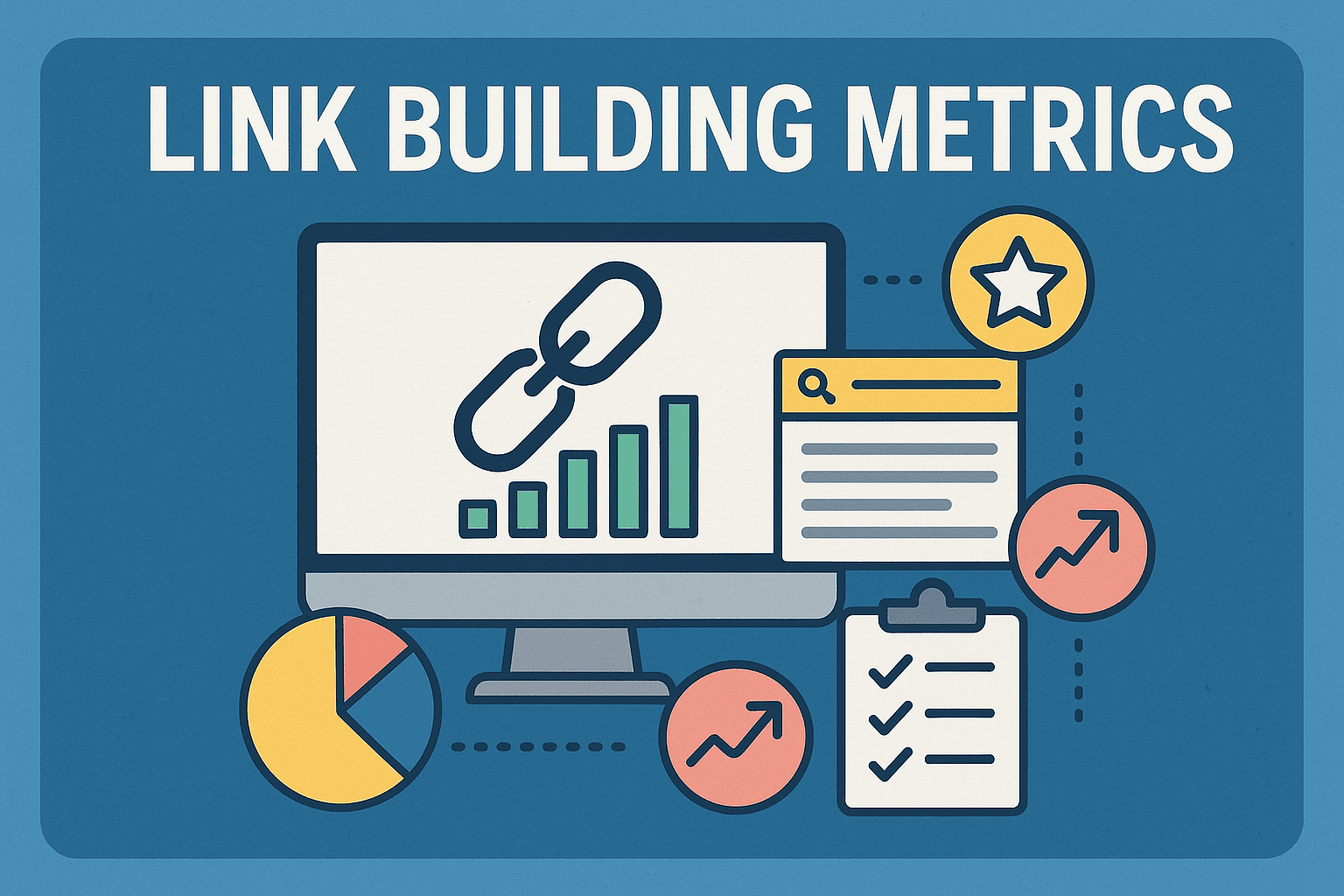
Backlink quality assessment involves regularly reviewing acquired links to ensure they meet your standards and provide SEO value. Monitor metrics such as referring domain authority, link placement context, anchor text diversity, and traffic potential to gauge the effectiveness of your automated campaigns.
Anchor text distribution analysis prevents over-optimization that could trigger search engine penalties. Quality automation platforms automatically vary anchor text patterns, using branded terms, generic phrases, and target keywords in natural proportions that mimic organic linking patterns.
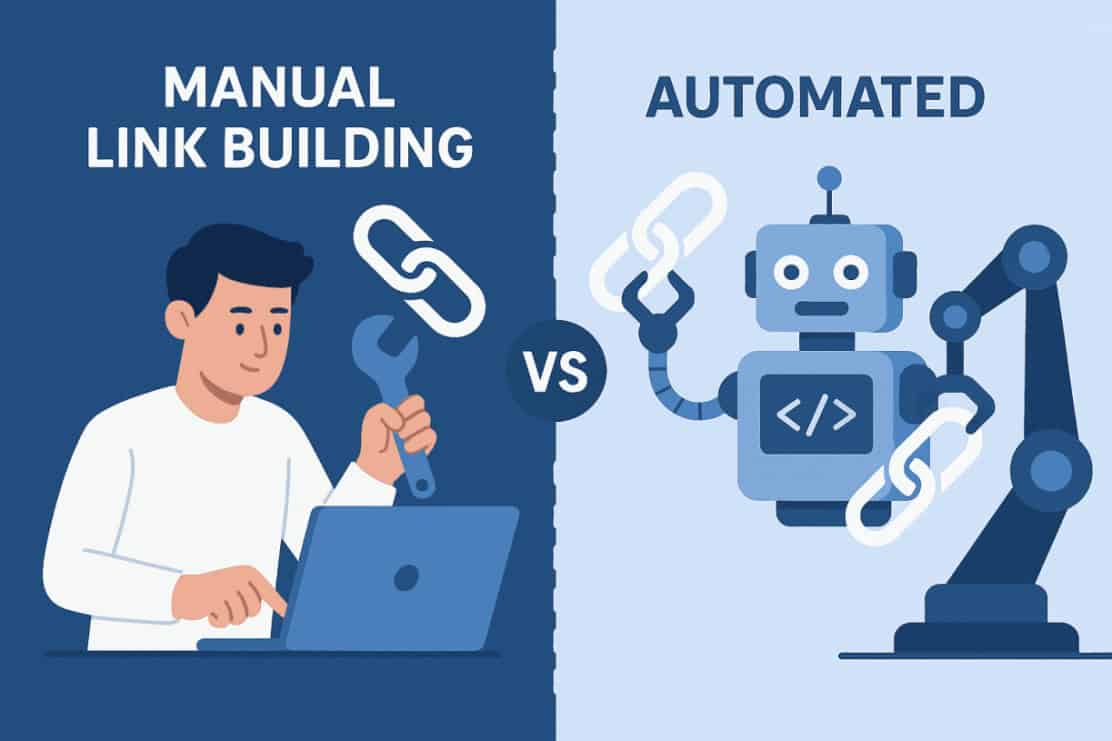
Competitor analysis integration helps identify new opportunities and benchmark your progress against industry rivals. Understanding the differences between manual and automated approaches can inform your strategy optimization and help you leverage the best aspects of both methodologies.
Performance tracking encompasses both link acquisition metrics and broader SEO improvements. Monitor changes in search rankings, organic traffic, and domain authority to assess the impact of your automated link building efforts on overall SEO performance.
Common Pitfalls and How to Avoid Them
Automated link building, while powerful, presents several potential pitfalls that can undermine your SEO efforts if not properly managed. Understanding these challenges and implementing preventive measures ensures your automation strategy delivers positive results without risking penalties or reputation damage.
Over-reliance on automation without human oversight represents one of the most significant risks. While automation handles most operational tasks effectively, human judgment remains essential for strategic decisions, quality control, and relationship management. Maintain regular review processes and be prepared to intervene when necessary.
Quality compromise in pursuit of quantity can severely damage your SEO efforts. Resist the temptation to lower quality thresholds to increase link volume, as low-quality backlinks can harm your search rankings and require expensive cleanup efforts. Focus on acquiring fewer, higher-quality links that provide lasting SEO value.
Insufficient diversification in link sources and anchor text can create unnatural patterns that search engines may penalize. Ensure your automation platform varies link sources, anchor text, and content types to maintain natural-looking backlink profiles that support long-term SEO success.
Neglecting to monitor competitor activities and industry changes can leave your automation strategy outdated and ineffective. Regularly review your approach against current best practices and adjust your parameters to reflect evolving search engine algorithms and industry standards.
Integration with Broader SEO Strategies
Automated link building works most effectively when integrated with comprehensive SEO strategies that address all aspects of search engine optimization. This holistic approach ensures that your link building efforts complement and amplify other SEO activities rather than operating in isolation.
On-page optimization coordination ensures that your website can effectively capitalize on acquired backlinks. Before launching automated link building campaigns, verify that your target pages are properly optimized for relevant keywords, provide excellent user experiences, and offer valuable content that justifies inbound links.
Content marketing alignment creates synergies between your link building automation and content creation efforts. Develop content calendars that support your link building themes while providing additional value to your audience and creating natural opportunities for organic link acquisition.
Technical SEO maintenance ensures that your website can handle increased link equity effectively. Address issues such as page load speed, mobile responsiveness, and crawlability to maximize the SEO impact of your automated link building investments.
Implementing comprehensive tracking systems provides visibility into how your automated link building efforts contribute to overall SEO performance and business objectives.
Measuring Return on Investment
Calculating the return on investment for automated link building requires tracking both direct costs and indirect benefits across multiple timeframes. This comprehensive analysis helps justify automation investments and optimize resource allocation for maximum impact.
Direct cost analysis includes platform subscription fees, content creation costs, and any additional services required to support your automation efforts. Compare these expenses against the costs of manual link building or agency services to establish baseline cost effectiveness.
SEO performance improvements represent the primary return on automated link building investments. Track changes in search rankings, organic traffic, and conversion rates that can be attributed to your link building efforts. Use tools like Google Analytics and Search Console to measure these improvements accurately.
Time savings quantification helps demonstrate the efficiency benefits of automation. Calculate the hours that would be required for manual link building and multiply by relevant hourly rates to determine the opportunity cost savings provided by automation platforms.
Long-term value assessment considers the cumulative and compounding effects of consistent link building over extended periods. Quality backlinks continue providing SEO value for years after acquisition, making the true ROI of automated link building much higher than initial calculations might suggest.
Future Trends in Link Building Automation
The link building automation landscape continues evolving rapidly, driven by advances in artificial intelligence, machine learning, and search engine algorithm updates. Understanding emerging trends helps you prepare for future opportunities and challenges in automated link building.
Artificial intelligence integration is becoming more sophisticated, enabling automation platforms to make increasingly nuanced decisions about link opportunities, content creation, and campaign optimization. These AI-powered systems can adapt to changing conditions and improve performance over time without manual intervention.
Personalization capabilities are expanding to create more targeted and effective outreach campaigns. Advanced systems can analyze individual website preferences, editorial guidelines, and historical acceptance patterns to customize approaches for maximum success rates.
Quality assessment algorithms are becoming more sophisticated, incorporating additional metrics and signals to evaluate link opportunities more accurately. These improvements help automation platforms identify high-value opportunities while avoiding potentially harmful placements.
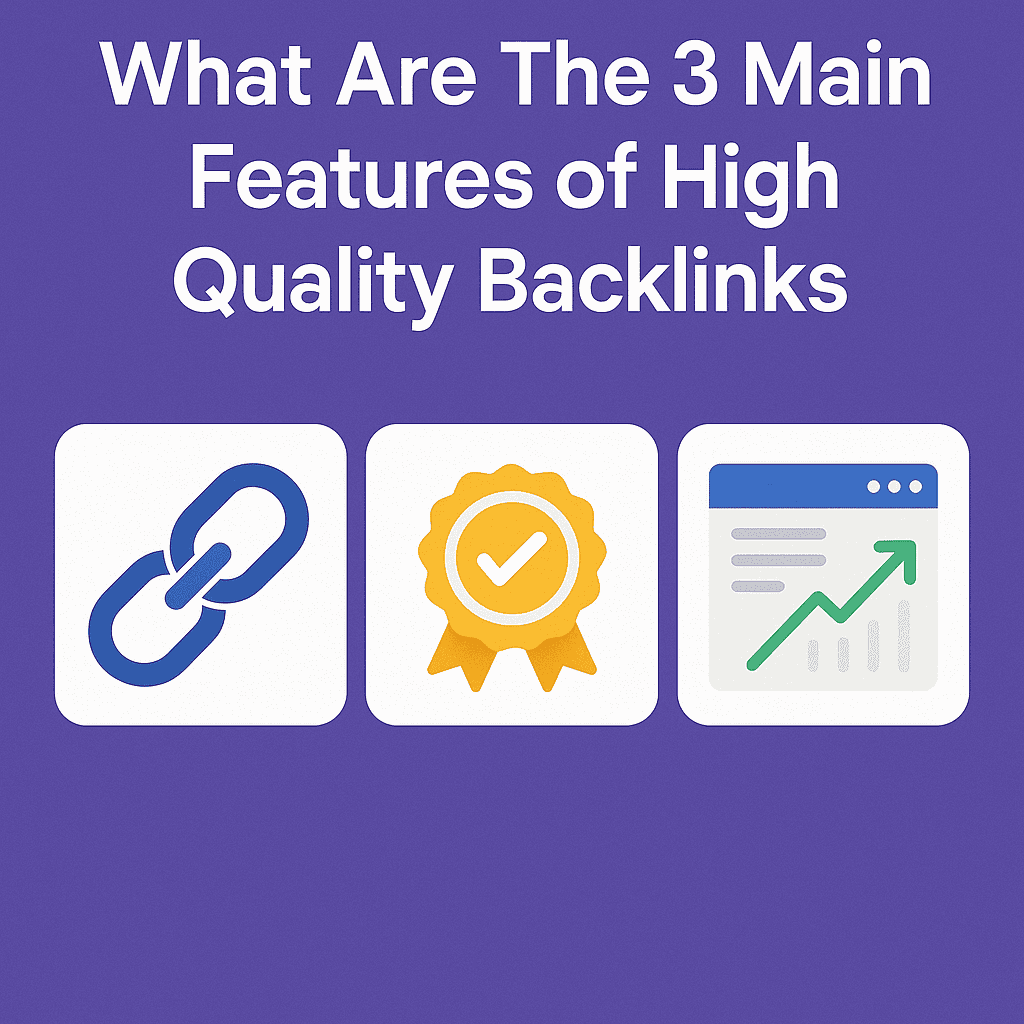
Understanding quality backlink characteristics becomes increasingly important as automation platforms evolve to prioritize these essential features in their targeting and acquisition processes.
Getting Started with Automated Link Building
Beginning your automated link building journey requires careful planning, realistic expectations, and commitment to quality over quantity. Start with clear objectives and gradually scale your efforts as you gain experience and confidence in the automation process.
Platform selection represents your first critical decision. Evaluate different automation platforms based on their feature sets, quality standards, pricing models, and customer support. Consider starting with a trial period to assess platform effectiveness before committing to long-term contracts.
Initial campaign configuration should be conservative, focusing on high-quality opportunities rather than maximum volume. Set strict quality thresholds and monitor results closely during your first few months to ensure the platform delivers expected results.
Budget planning should account for both platform costs and the time required for monitoring and optimization. While automation reduces hands-on work, successful campaigns still require strategic oversight and periodic adjustments.
Performance expectations should be realistic, recognizing that quality link building takes time to show results. Plan for gradual improvements over several months rather than expecting immediate dramatic changes in search rankings or traffic.
Hands-off link building automation represents a powerful evolution in SEO strategy, offering the potential to scale link acquisition efforts while maintaining quality standards. By understanding the technology, implementing best practices, and maintaining strategic oversight, you can leverage automation to build a strong backlink profile that supports long-term SEO success. The key lies in finding the right balance between automation efficiency and human judgment, ensuring that your link building efforts remain both effective and sustainable in the ever-evolving search landscape.

![Longtail Pro Moz or Majestic [Full Breakdown]](https://backlinkdesk.com/wp-content/uploads/2025/11/ChatGPT-Image-Nov-14-2025-08_30_38-AM.png)








![How Many Outbound Links Per Blog [2025 Updated]](https://backlinkdesk.com/wp-content/uploads/2025/06/How-Many-Outbound-Links-Per-Blog.png)
![B2B and B2C Website Examples [2025 Updated]](https://backlinkdesk.com/wp-content/uploads/2025/05/B2B-and-B2C-Website-Example-.png)

![What To Do After Keyword Research [2025 Guide]](https://backlinkdesk.com/wp-content/uploads/2025/05/What-To-Do-After-Keyword-Research.png)
![Is Page Speed Really A Ranking Factor? [2025]](https://backlinkdesk.com/wp-content/uploads/2025/05/Is-Page-Speed-Really-A-Ranking-Factor.png)







![Best Link Exchange Sites [Free & Safe] – Top 5 Picks](https://backlinkdesk.com/wp-content/uploads/2025/04/Free-Link-Exchange.png)